2026 Shanghai International Textile Graduate Summer School TeachingBriefing
Issue4 July 6, 2026 E-mail: fzsqxx@dhu.edu.cn
2026organizing committee of Shanghai Textile Graduate InternationalSummer,
writtenby: Enqi Wang
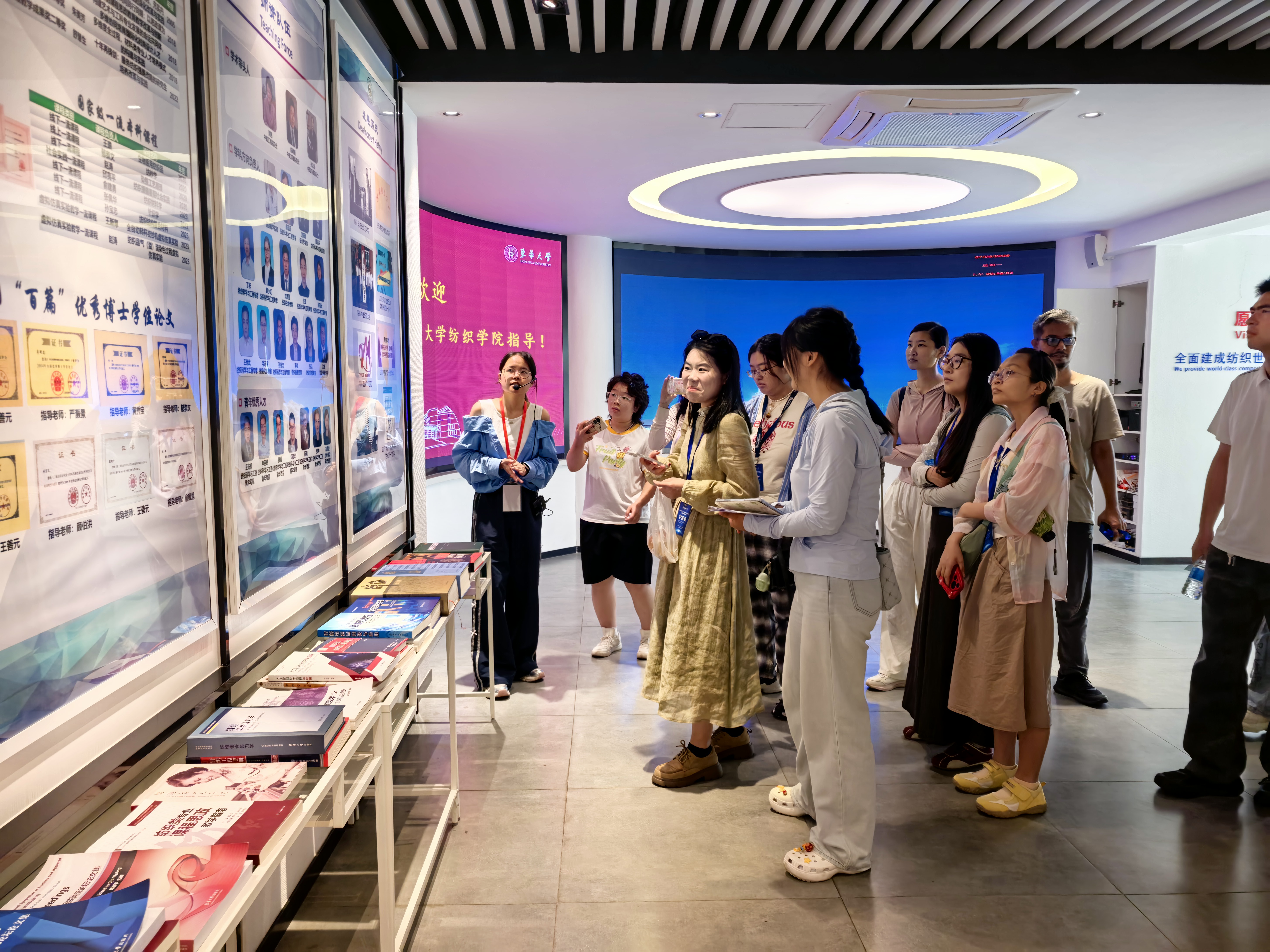
On July 6, the summer school arranged a visit to the Donghua University History Museum, the Science and Technology Museum, and the Textile Education Exhibition Hall, followed by an academic lecture by Professor Xuyuan Tao from Ecole Nationale Supérieure d'Ingénieursdes Textiles (ENST).
Visitto the University History Museum, Science and Technology Museum, andTextile Education Exhibition Hall. At the History Museum,participants gained a systematic understanding of Donghua University’s complete educational evolution and achievements intalent cultivation. As a higher education institution with a strong focus on textiles, the university has long been deeply engaged intextile and related fields, accumulating a profound academic foundation and supplying a large number of highly qualified professionals to China’s textile industry. The Science and Technology Museum displayed the university’s recent cutting edge research outcomes and technology implementation cases, fully demonstrating its outstanding performance in industry university research integration.
The Textile Education Exhibition Hall served as the core of the visit. It comprehensively presented the developmental strengths and frontier research directions of Donghua’s textile discipline, with exhibit scovering traditional textile innovation, functional textilematerials, medical textiles, smart textiles, and more, thus offeringa complete picture of the discipline’s transformation towards high end, intelligent, and green development. Through thisvisit, the participants truly experienced the top tiercomprehensive strength of Donghua’s textile discipline, gained aclearer understanding of the innovative development directions in thetextile industry, and effectively broadened their professional horizons and enriched their knowledge, laying a solid foundation fortheir future academic studies and research work.
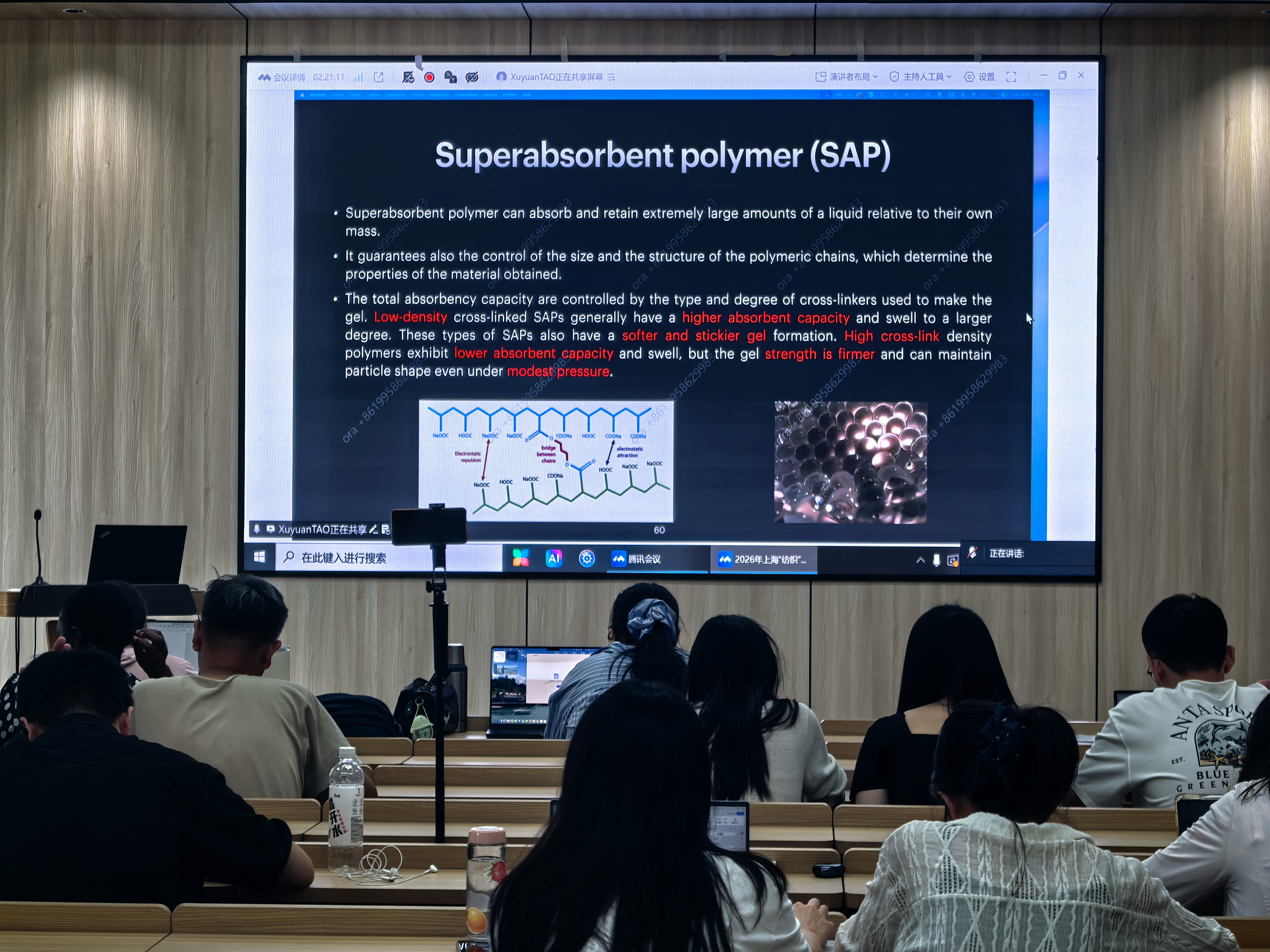
Professor Xuyuan Tao reported on the current status of standards, material innovations, and commercialization challenges in the smart textiles field. He pointed out that the core feature of smart textiles lies inthe “sensing response” loop, which has reached a clear consensus in academia, but official standards are still lacking. Itis predicted that approximately 10% of garments will incorporate smart textiles, indicating enormous market potential. Professor Tao highlighted four major types of smart materials and their applicationadvances. Electrochromic materials enable zero power standbydisplays, and his team has developed a fabric based displayprototype. Phase change materials, through microencapsulation of paraffin, achieve bidirectional temperature regulation and havealready been applied to business shirts with mass production.Shape memory alloys and polymers can be triggered by temperature or electrical current to undergo deformation, showing significant potential in dynamic apparel and bio inspired interactive applications. Hydrogels, with their three dimensional network structure, efficiently retain water and represent an important direction for flexible functional materials. Combining physical demonstrations and commercial cases, Professor Tao balanced academic depth with an industrial perspective. At the same time, he frankly addressed the core obstacles to large scale commercialization,including insufficient washing durability, limited durability, andhigh costs, using the discontinuation of Xiaomi’s smart clothing asa cautionary example of risks in technology implementation. Thelecture not only established a comprehensive research framework forsmart textiles but also provoked deep reflection on the key issues involved in translating technology from the laboratory to themarketplace.
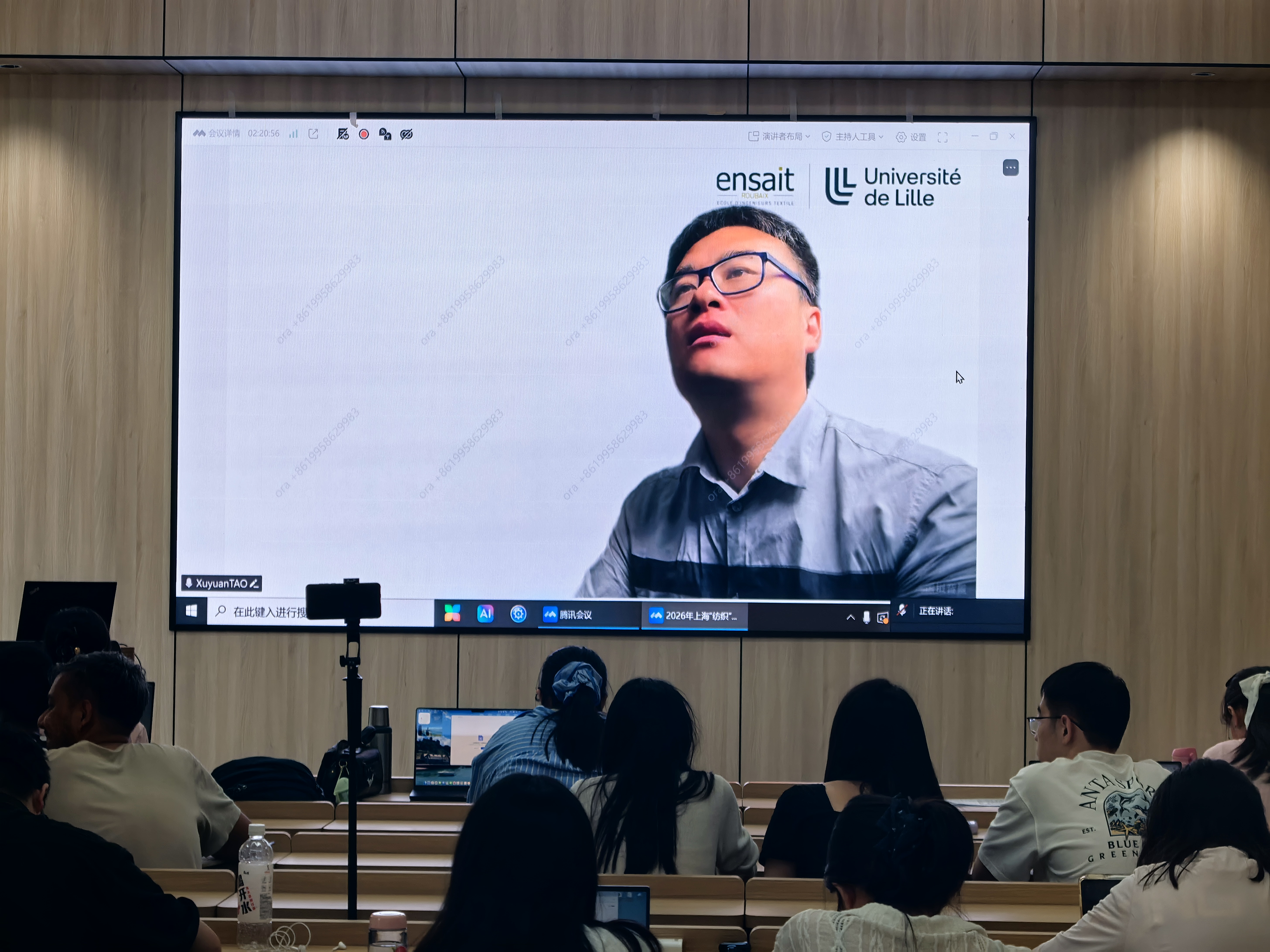
(ProfessorXuyuan Tao)

