2026 Shanghai International Textile Graduate Summer School Teaching Briefing
Issue6 July 8, 2026 E-mail: fzsqxx@dhu.edu.cn
2026organizing committee of Shanghai Textile Graduate InternationalSummer,
writtenby: Enqi Wang
OnJuly 8, Professor Xungai Wang from Zhejiang Sci Tech University,Associate Professor Bi Siyi from Donghua University, and Professor Roohollah from Amirkabir University of Technology (Iran) deliveredacademic presentations.
Professor Xungai Wang focused on natural fiber powder research. Over twodecades, his team overcame the technical barriers of ultrafinepulverization of flexible fibers, established a dedicated laboratory,and secured multimillion Australian dollar project funding.Their core technologies have achieved breakthroughs in multiplefields: they pioneered a dope dyeing process for fiber powders,which successfully resolved the color bleeding issue on theChang'e series lunar flags under extreme environments; developed asimultaneous recovery technique for both fibers and color from denimwaste, which received the 2017 Global Change Award and has beenpiloted in Guangdong Province; modified 3D printed scaffoldswith silk fibroin powder to enhance mechanical properties byfivefold, contributing to tissue engineering; and applied carbonizedcotton powder for precision parts manufacturing, while wool powder,with its high adsorbability, is used for odor control and airpurification. Professor Wang is currently setting up a new laboratoryto accelerate the industrialization of these technologies.
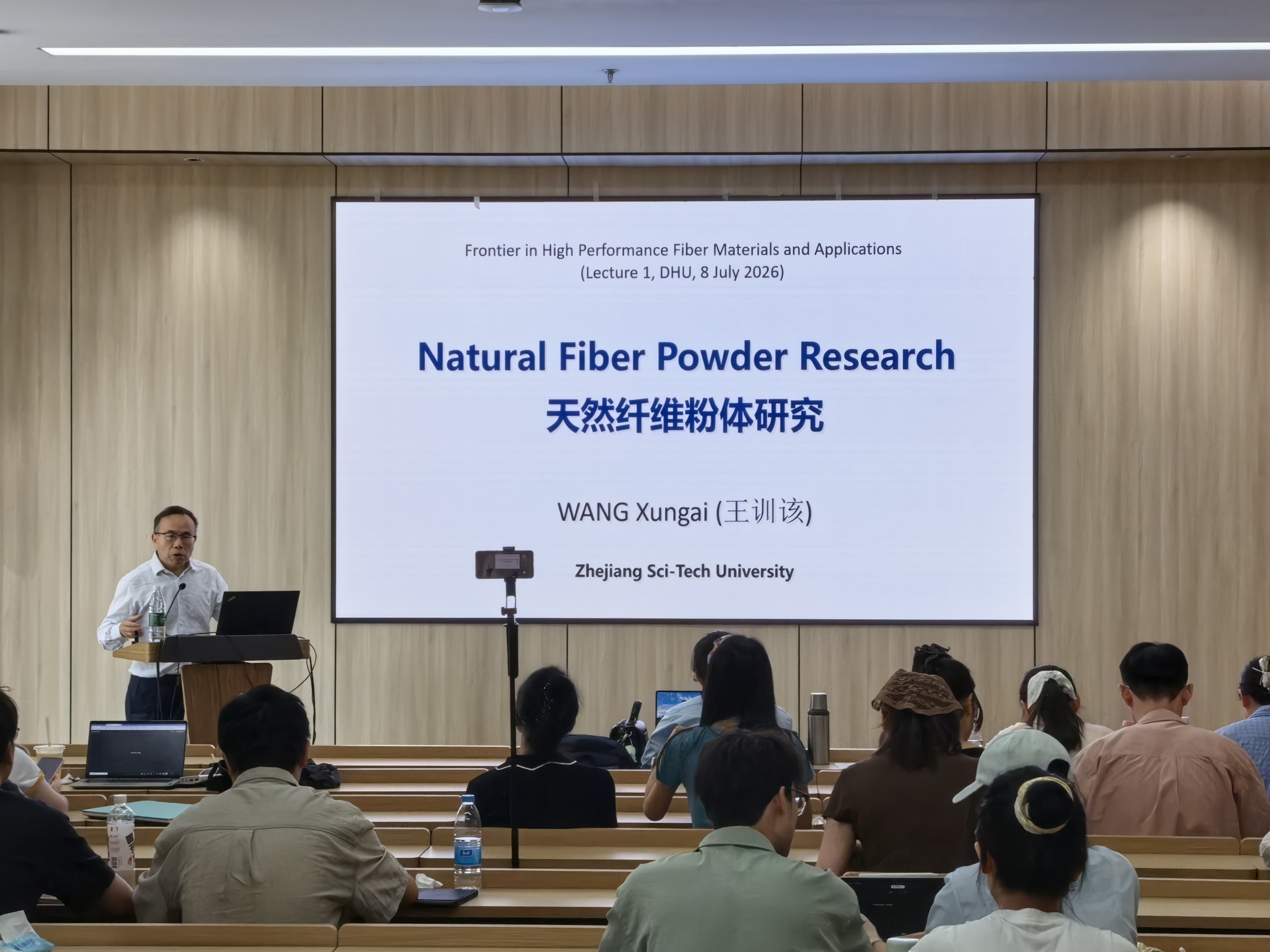
(Professor Xungai Wang)
Associate Professor Bi Siyi systematically elaborated on the core theoreticalframework of weft knitting technology. She first clarified theposition of knitting in the textile industry chain and establishedweft knitting as the main research thread by comparing itsdifferences with weaving, braiding, and nonwoven processes. She thendissected the microstructure of weft knitted loops, detailingthe unit features composed of needle loops, legs, and sinker loops,and distinguished the visual criteria for identifying face loops andback loops. On this basis, she analyzed five key process parameters:loop length, which determines fabric tightness; cover factor andtightness factor, which quantify fabric compactness; and wale densityand course density, which define fabric density. The presentationalso demonstrated the complete latch needle knitting cycle withdynamic illustrations, step by step explaining the criticalactions of clearing, yarn feeding, closing, and knocking over,as well as clarifying the cooperative mechanism of sinkers in holdingthe loops, thus providing a comprehensive theoretical foundation forprecise control of weft knitting processes.
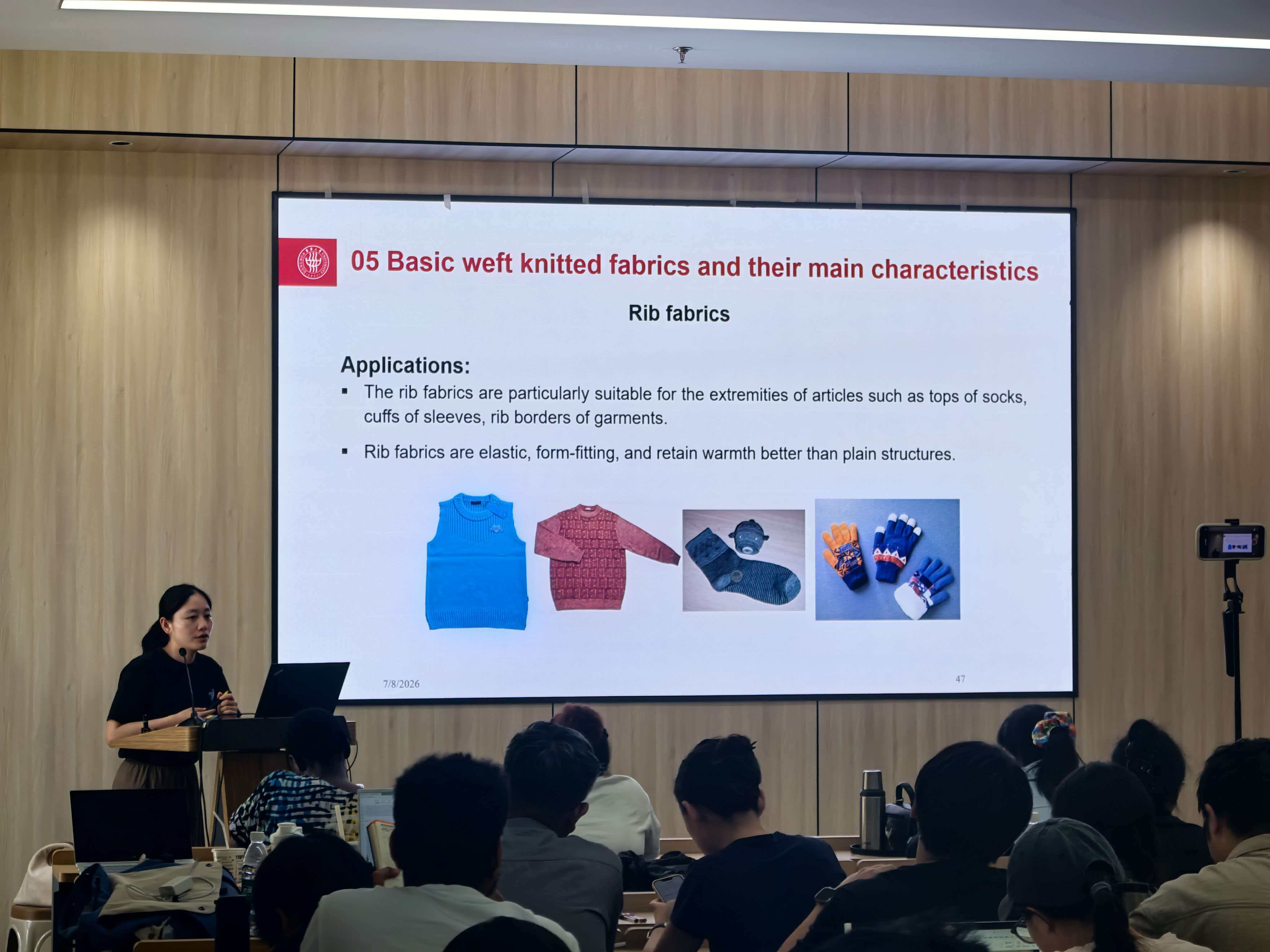
(Associate Professor Siyi Bi)
Professor Roohollah focused on biomedical applications of advanced fibermaterials and reported recent progress in three directions. In smarttextiles, he introduced a sensor integrated "smart babymonitor" capable of unobtrusively monitoring infant respirationand heart rate, with remote data transmission to support medicaldiagnosis; this product addresses the childcare needs of dual incomefamilies, and the global market is projected to reach USD 2 billionby 2026. In gas sensors, based on metal oxide semiconductormechanisms and leveraging the high specific surface area ofnanofibers, his team achieved highly sensitive and rapid detection oftoxic gases, with durability and easy cleaning, suitable forindustrial safety and home protection. In bioelectrical signalmonitoring, they developed dry textile electrodes to replaceconventional gel electrodes, alleviating discomfort during long termwear; current efforts are concentrated on overcoming challenges inimpedance stability and large scale production.
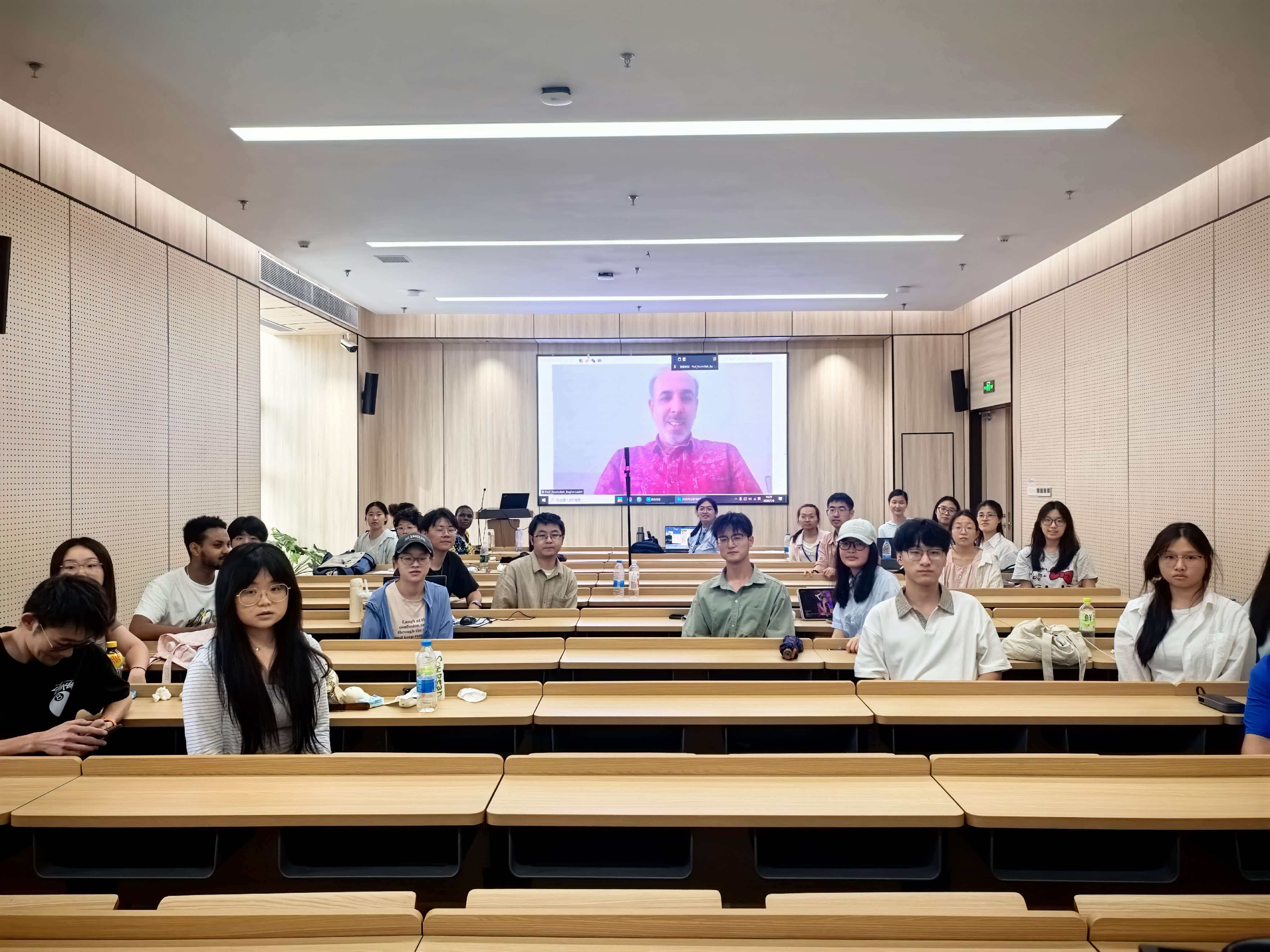
(Professor Roohollah)

